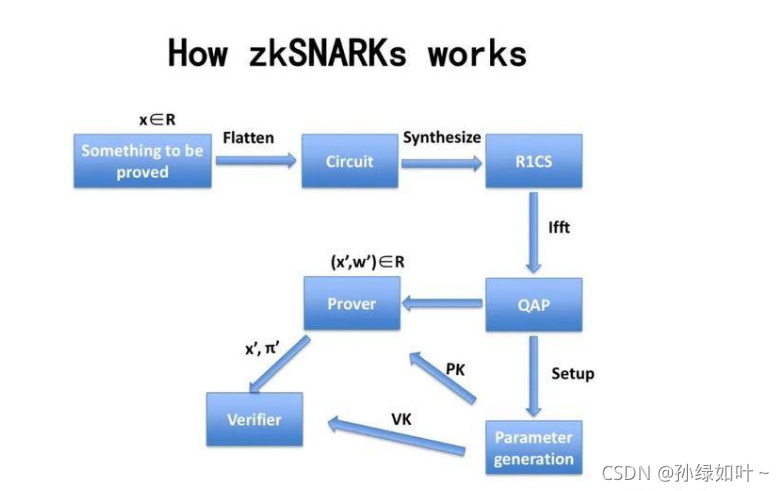
For years, privacy tools employ a strategy of "hiding in the crowd." VPNs direct you through a server, and Tor moves you through several nodes. The latter are very effective, but they disguise their source through moving it instead of proving it doesn't need to be revealed. Zk-SNARKs (Zero-Knowledge Succinct, Non-Interactive Arguments of Knowledge) introduce a entirely different approach: you may prove that you're authorized to do something without divulging who the authorized person that you're. It is possible to prove this in Z-Text. you can send a message through the BitcoinZ blockchain, and the system can prove that you're an authentic participant using legitimate shielded accounts, however it's not able to identify which particular address broadcast it. The IP of your computer, as well as the person you are as well as your identity in the transaction becomes unknowable to the observer, yet in fact, it's valid and enforceable to the protocol.
1. The Dissolution of the Sender-Recipient Link
It is true that traditional communication, even with encryption, reveal the relationship. A observer sees "Alice has been talking to Bob." Zk-SNARKs cause this to break completely. If Z-Text sends out a shielded message it confirms it is valid and that the sender's balance is sufficient and the correct keys--without revealing that address nor recipient's address. An outside observer will notice that this transaction appears as sound wave that originates generated by the network, that is, not from a particular user. It is when the connection between two people becomes mathematically difficult to prove.
2. IP address protection at the Protocol Niveau, not the App Level
VPNs and Tor provide protection for your IP by routing your traffic through intermediaries. However these intermediaries create new points for trust. Z-Text's implementation of zk_SNARKs is a guarantee that your IP's address will never be relevant to the transaction verification. Once you send your signal protected to the BitcoinZ peer-to-10-peer system, you constitute one of the thousands nodes. The zk proof ensures that observers are watching Internet traffic, they're unable to match the message being sent with the exact wallet that is the originator, as the authentication doesn't carry that specific information. The IP is merely noise.
3. The Abrogation of the "Viewing Key" Difficulty
In a variety of blockchain privacy platforms, you have an "viewing key" that is able to decrypt transactions information. Zk -SNARKs, as they are implemented in Zcash's Sapling algorithm used by Ztext can be used to allow selective disclosure. You are able to demonstrate that you've sent a message with no divulging your IP or any of your other transactions, or all the content the message. The proof in itself is not the only item shared. This granular control is impossible in IP-based systems where revealing this message will reveal the identity of the sender.
4. Mathematical Anonymity Sets That Scale Globally
In a mixing solution or a VPN in a mixing service or a VPN, your anonymity is restricted to other users from that pool the time. With zkSARKs you can have your privacy will be guaranteed by every shielded address to the BitcoinZ blockchain. Since the proof proves that the sender has *some* identified shielded identity among the potentially millions of addresses, yet gives no indication of which, your privacy is as broad as the network. This means that you are not only in any one of your peers or in a global mass of cryptographic names.
5. Resistance to the Traffic Analysis and Timing Attacks
Highly sophisticated adversaries don't simply read IPs, they look at the traffic patterns. They evaluate who's sending data what at what point, and they also look for correlations between the timing. Z-Text's use of zk-SNARKs, when combined with a Blockchain mempool allows decoupling of the action from the broadcast. You are able to make a verification offline and publish it afterward when a server is ready to relay it. When you broadcast a proof, the time it was made for its inclusion in a block is not necessarily correlated with the point at which you made the proof, defying timing analysis which frequently beats more basic anonymity tools.
6. Quantum Resistance by Using Hidden Keys
It is not a quantum security feature. In the event that an adversary could trace your network traffic today and then break your encryption later and link it back to you. Zk-SNARKs, as used in Z-Text protect your keys from being exposed. Your public key is never visible on blockchains since the proof confirms that it is the correct key however it does not reveal the exact key. A quantum computing device, to the day, could observe only the proof rather than the private key. Your communications from the past remain confidential due to the fact that the key used create them was not disclosed to cracking.
7. Unlinkable identities across several conversations
By using a single seed for your wallet allows you to create multiple protected addresses. Zk-SNARKs allow you to prove that you're the owner of the addresses without sharing which. It means that you are able to have several conversations in ten different individuals. No person, not even blockchain itself, can trace those conversations to the specific wallet seed. The social graph of your network is mathematically split by design.
8. Elimination of Metadata as an Attack Surface
Spies and regulators often claim "we do not need the content instead, we need metadata." These IP addresses constitute metadata. The people you speak to are metadata. Zk-SNARKs stand out among privacy techniques because they encrypt information at the cryptographic layer. There are no "from" or "to" fields in plaintext. There's also no metadata included in the provide a subpoena. All you need is documentary evidence. And the proof provides only proof that an decision was made, and not the parties.
9. Trustless Broadcasting Through the P2P Network
When you sign up for an VPN You trust that the VPN provider not to track. If you are using Tor You trust the exit point not to record your activities. With Z-Text you send your zk proof transaction to BitcoinZ peer-to-peer network. Connect to a handful of random nodes, broadcast the information, then disengage. They don't gain anything as their proofs reveal nothing. There is no way to be certain that you're the original source, given that you may be doing the relaying on behalf of another. The internet becomes a trustworthy transporter of confidential information.
10. "The Philosophical Leap: Privacy Without Obfuscation
In the end, zk-SNARKs are some kind of philosophical leap, to move from "hiding" to "proving with no disclosure." Obfuscation technology recognizes that the truth (your IP, identity) can be risky and needs to be hidden. ZkSARKs realize that the fact isn't relevant. The protocol only needs to be aware that it is legally authorized. Moving from a reactive concealing to active inevitability is one of the fundamental components of the ZK shield. Your identity and your IP aren't hidden. They have no relevance to the role of the network which is why they are never asked for either transmitted, shared, or revealed. See the top rated blockchain for website info including text privately, text privately, messages messaging, messenger text message, messenger not showing messages, encrypted text app, text message chains, text privately, message of the text, encrypted messages on messenger and more.
"The Mutual Handshake: Rebuilding Digital Trust in the Zero-Trust World
The internet was built on a foundation of implicit connection. Everyone is able to contact anyone. Anyone can be a follower on social media. While this is beneficial, it has is causing a crisis in trust. Privacy, hacking, and harassment are all evidence of a technology where communication is not dependent on authorization. Z-Text turns this misconception upside down by using the mutual handshake. Prior to the first byte information is transmitted between two parties it is necessary for both parties to explicitly consent that they want to connect, and the contract is signed by Blockchain and validated by Zk-SNARKs. The simple requirement of mutual consent on the protocol level - builds digital trust from the foundation up. The digital world is analogous to physical where you're not able to communicate with me unless I accept my acknowledgement as a person, and I am unable to talk to you unless you accept me. In this age of zero faith, the handshake has become the basis for all communicating.
1. The handshake as is a ceremony of Cryptography
In Z-Text's handshake, it isn't just a standard "add contact" button. It's a digital ceremony. Party A generates a connection request that contains their public keys and a temporary impermanent address. Party B has received this request (likely out-of-band or via a public message) as well as generates an accept of their private key. The parties can then, on their own, create from the same secret a shared key that establishes the communications channel. This procedure ensures that each party has actively taken part and that no man-in-the-middle can enter the channel without being detected.
2. "The Death of the Public Directory
Spam exists because email addresses and telephone numbers are part of public directories. Z-Text isn't a publicly accessible directory. Your z-address is never published to the blockchain. It is hidden inside shielded transactions. The potential partner must have something to do with you - your official identification, your QR code, or a shared personal secret to be able to make the handshake. There is no search function. This means that you are not able to use the first vector that leads to unsolicited contacts. The person you want to reach cannot be contacted by an address you cannot find.
3. Consent is a Protocol However, it is not Policy
With centralized applications, consent is considered a standard. Users can choose to ban someone after you receive a message from them, however they've already entered your inbox. In Z-Text, consent is embedded into the protocol. Every message must be received with having a handshake beforehand. Handshakes are a negligible proof that both of the parties endorsed the connection. This is why the protocol requires the consent, not merely permitting individuals to be able to react to contravention. The structure itself is respectable.
4. The Handshake as a Shielded Time
Since Z-Text uses zk-SNARKs, even the handshake itself can be private. If you are able to accept a connection to another party, the exchange is secreted. In the eyes of an observer, the two parties have formed a bond. Your social graph grows invisibly. The handshake happens in cryptographic blackness that is only visible to both parties. This is unlike LinkedIn or Facebook and Facebook, where every link is broadcast.
5. Reputation Absent Identity
Which one do you decide you can shake hands with? Z-Text's method allows for establishment of reputation systems which are not dependent on the disclosure of the identity of an individual. Because connections are private, there is a chance that you will receive a handshaking request by someone with any common contact. The common contact can vouch on behalf of them by using a cryptographic authentication, without divulging any information about who either of you are. Trust becomes transitive and zero-knowledge one can give someone your trust for the reason that someone you trust trusts they are trustworthy, and you never learn their identity.
6. The Handshake is a Spam Pre-Filter
With the requirement for handshakes the spammer who is determined could have the ability to demand thousands of handshakes. Each handshake, much like any message, has to pay a tiny fee. This means that spammers are now facing the same financial hurdle at the connecting stage. The cost of requesting a million handshakes is $30,000. But even if they're paying but they'll require you to sign. The micro-fee and handshake create an additional economic obstacle that can make mass outreach financially unsustainable.
7. Repair and Transferability of Relationships
In the event that you retrieve your Z-Text persona from your seed words the contacts also restore also. How does the application learn who your contacts really are without a central database? The handshake protocol creates an insignificant, encrypted file into the blockchain; a confirmation that connections exist between two shielded addresses. If you decide to restore your wallet, the wallet searches for handshake notes and rebuilds your contact list. Your social graph is stored on the blockchain but only visible to you. You can transfer your connections as easily and as are your accounts.
8. The handshake is a quantum-safe Requirement
It establishes the mutual handshake as a mutually shared secret between two people. The secret can be used to create keys that can be used in future exchanges. Because the handshake itself confidential and does not will reveal the keys of public parties, it is resistant to quantum decryption. Any adversary will not be able to crack your handshake, revealing it was a relationship since the handshake left no public key exposed. The commitment is permanent, yet it's invisibility.
9. Revocation and the Un-handshake
There is a risk of breaking trust. Z-Text provides an "un-handshake"--a electronic revocation for the connection. When you block someone, the wallet transmits a revocation document. The proof informs the protocol that all future messages coming from the blocked party should be ignored. Because it's on-chain, the denial is permanent, and can't be disregarded by any other client. The handshake can be undone at any time, and the undoing of it is the same as the original contract.
10. The Social Graph as Private Property
And lastly, the handshake establishes who's in charge of your personal social graph. In central networks, Facebook or WhatsApp own the graph of who is talking to whom. They mine, analyze it, then market it. With Z-Text, your personal social graph is protected and stored on the blockchain. It is accessible only by the user. No company owns the map that shows your relationship. The signature ensures that the one and only proof of connection is kept by you and your contact. Your information is secured cryptographically from the world. Your network is yours which is not the property of any corporation.